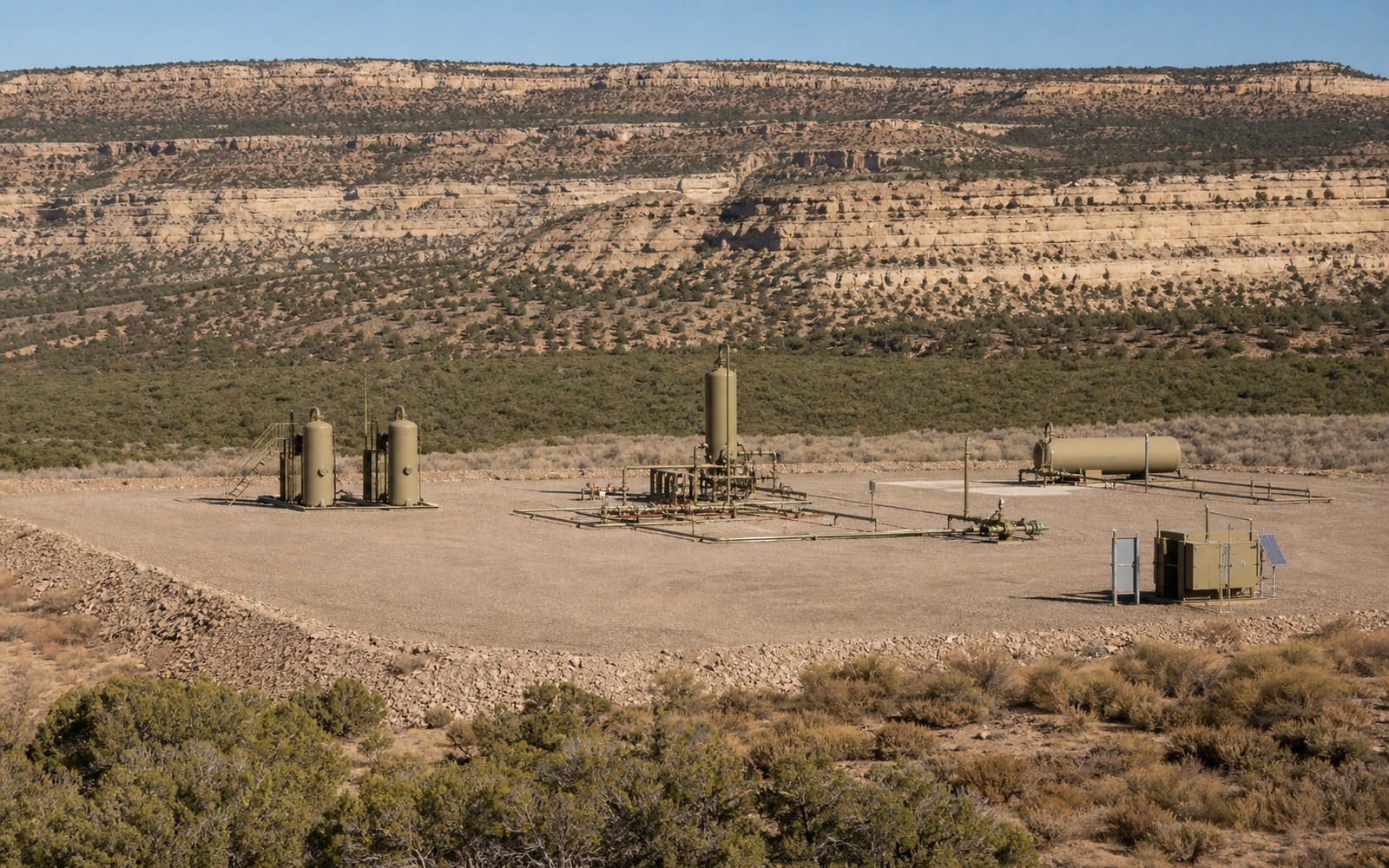
Uinta Basin Mineral Rights
Almost every other basin covered here is a story about rock. This one is as much a story about railroads, because Uinta Basin crude has a transportation problem most other American oil doesn't.
The Uinta Basin sits in northeastern Utah, primarily under Duchesne and Uintah counties, and produces an unusually waxy crude oil that solidifies at relatively warm temperatures, which makes it more expensive and logistically complex to transport by standard pipeline than typical light sweet crude. Ovintiv, which built much of its position here through its earlier Newfield Exploration acquisition, Crescent Energy, and XCL Resources are among the more active operators, with private equity-backed consolidation of legacy royalty interests a notable trend in this basin over the past several years.
Why waxy crude changes the whole economics
Standard crude oil pipelines aren't well suited to Uinta Basin's waxy production without specialized heating or treatment, which has historically pushed a large share of this basin's oil onto rail and truck transport instead. That's more expensive per barrel than pipeline transport, which narrows the basin's competitiveness against other US plays when oil prices are lower, and it's a big part of why Uinta Basin activity has been more boom-and-pause than the steady multi-year development seen in pipeline-connected basins.
The rail expansion question
A proposed rail line expansion, aimed at increasing the basin's takeaway capacity by rail, has been in various stages of federal review and legal challenge for several years, with environmental groups contesting the project's approval. If that expansion moves forward, it could meaningfully improve the basin's transportation economics and support more sustained drilling activity. If it continues to face delay or is blocked, the basin's development pace likely stays constrained by existing infrastructure. This is a genuinely material, still-unresolved variable for anyone valuing minerals here, and it's worth asking any buyer directly how they're pricing that uncertainty into an offer.
Consolidation of legacy royalty ownership
Because so much Uinta Basin mineral and royalty ownership traces back to smaller, longer-held family and legacy interests, private equity-backed acquisition funds have been actively consolidating fractional positions across the basin in recent years, betting on improved long-term takeaway capacity. This has kept a real, if specialized, buyer market active even during periods when drilling activity itself has slowed, which is somewhat different from other quiet basins where buyer interest dries up alongside rig counts.
What to weigh before selling here
If you're holding out for resolution of the rail infrastructure question before selling, understand that timeline has already run years longer than early projections suggested, and there's no guarantee of a near-term outcome either way. A fair current offer should reflect both today's constrained transportation reality and a reasonable, discounted allowance for the possibility that infrastructure improves later. Weighing whether to sell now against that uncertainty or hold for a possible resolution is a genuinely personal call that depends on your own timeline and risk tolerance.
Tar sands and oil shale neighbors, not the same thing
The Uinta Basin is sometimes mentioned alongside Utah's tar sands and oil shale deposits, which sit in the same general region but represent entirely different resources with their own separate development history, economics, and in most cases separate ownership. If you've heard about Utah oil shale or tar sands projects and are wondering whether that affects your conventional Uinta Basin minerals, in most cases it doesn't directly, since these are geologically and commercially distinct resources requiring different extraction methods. It's worth confirming specifically which resource your mineral deed actually covers rather than assuming any regional oil news applies to your particular interest, since conventional oil and gas rights, oil shale rights, and tar sands rights can in some cases be held separately even under the same surface acreage. The Utah Division of Oil, Gas and Mining maintains records that can help clarify exactly which resource and which operator, if any, is associated with your specific tract, and that clarity is worth having before you ever put a signature on paper.
Questions Owners Ask Before Authorizing a Sale Process
These answers keep every bidder working from the same asset definition, evidence, timing, access, and requested terms.
Why does Uinta Basin crude need special transportation?
It's an unusually waxy crude that solidifies at relatively warm temperatures, making standard pipeline transport more complex and often pushing production onto more expensive rail and truck transport instead.
What is the Uinta Basin Railway and why does it matter for mineral value?
It's a proposed rail expansion aimed at increasing the basin's oil takeaway capacity; it has faced years of federal review and legal challenge, and its outcome is a material, still-unresolved factor in the basin's development pace.
Why are private equity funds buying up small Uinta Basin royalty interests?
Many are betting on improved long-term transportation infrastructure and are consolidating fractional legacy interests across the basin at current, transportation-constrained pricing.
Should I wait for the rail expansion to resolve before selling?
That depends on your personal timeline and risk tolerance; the process has already taken years longer than early estimates suggested, with no guaranteed resolution date.
Carry the same property schedule, evidence room, bidder rules, deadline, clarification record, and conveyance scope into these related guides.
Want to organize a comparable, documented mineral-sale process?
Send the county and state, owner name, deed reference, operator or payor, recent statement, lease, division order, probate or trust record, and any written offer already received.