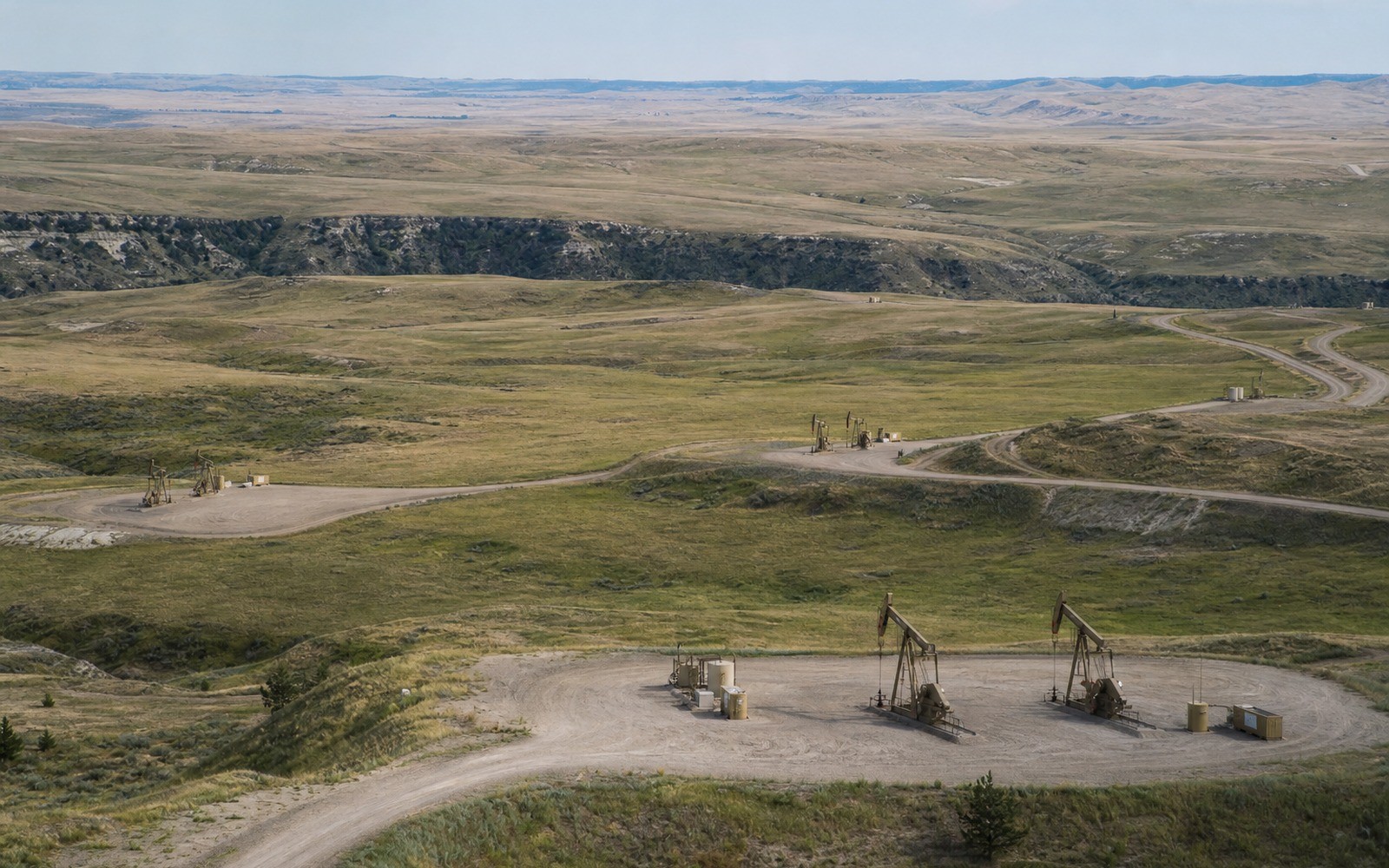
Bakken Mineral Rights
The Bakken kicked off the modern shale-oil era, and unlike some of its contemporaries, it never really went quiet — the core counties are still some of the most competitively bid oil minerals in the country.
The Bakken and underlying Three Forks formations sit under the Williston Basin, with McKenzie, Mountrail, Williams, and Dunn counties in North Dakota forming the productive core. This was the play that proved long-lateral horizontal drilling and multistage fracturing could work at scale, well before the Permian caught up, and Continental Resources, Hess, ConocoPhillips through its Burlington legacy, and Whiting — now part of Chord Energy — have spent over a decade building dense development programs across it.
Why McKenzie County sits at the center of it
McKenzie County alone accounts for a large share of North Dakota's total oil production, and it's where operators have pushed lateral lengths the furthest and packed the most wells per spacing unit. If your family's minerals sit in McKenzie or neighboring Mountrail and Williams counties, you're in the part of the basin where multi-well pad development has been the norm for years, which generally means a longer, more predictable production history to price a sale against.
Move toward Dunn County's western edge or the basin's outer fringe and you're in territory where well results get patchier and development has been slower and more selective.
The logistics factor unique to this basin
Unlike Texas and Oklahoma plays sitting near dense pipeline networks, Bakken production has always depended more heavily on rail and long-haul pipeline to reach refining markets, which means transportation costs and takeaway capacity affect the netback price you're actually getting paid against. When pipeline capacity has been tight in past years, differentials between Bakken wellhead pricing and national benchmarks widened, and that shows up directly in royalty checks even when production volumes hold steady. It's worth understanding your specific gathering and transportation deductions when reviewing a statement.
Weather, permitting pace, and what it means for timing
North Dakota's winters genuinely slow drilling activity for parts of the year, which creates a seasonal rhythm to permitting and completions that doesn't exist in southern basins. This doesn't change your interest's underlying value, but it can affect how quickly a buyer can get comparable recent transaction data to price against, and it's a reasonable thing to ask about if you're getting offers that seem to reference stale activity.
A mature core with real competitive bidding
Fifteen-plus years into major Bakken development, this isn't a speculative frontier play anymore, and that maturity works in a mineral owner's favor. There's enough transaction history and production data for buyers to underwrite confidently, which keeps the acquisition market active and competitive in the core counties even as the initial boom-era excitement has faded. A listing process that puts your production history in front of several Bakken-focused buyers at once still tends to outperform a single unsolicited offer, particularly for owners who haven't shopped their interest in several years and may not know current pricing.
Three Forks as the second act
A meaningful part of what's kept the Bakken's core counties active well past the initial development wave has been operators targeting the underlying Three Forks formation with its own set of horizontal wells, effectively giving many spacing units a second layer of drilling beyond the original Bakken bench. This stacked development is part of why McKenzie and Mountrail county royalty interests have often seen renewed activity years after an owner might have assumed their unit was fully developed. If you haven't checked recent permit filings near your tract in a while, it's worth doing before assuming your production history has already peaked, since a Three Forks well on the same unit can meaningfully change the picture. North Dakota's Oil and Gas Division publishes permit and completion data by section, so this is a straightforward check to run before you assume a producing history is finished growing. A broker who routinely pulls this data for Bakken owners can usually tell you within a day whether additional development near your unit is a realistic near-term prospect or not.
Questions Owners Ask Before Authorizing a Sale Process
These answers keep every bidder working from the same asset definition, evidence, timing, access, and requested terms.
Is the Bakken still being actively drilled?
Yes, particularly in McKenzie, Mountrail, and Williams counties, though the pace has moderated from the boom years as the play has matured into steadier, longer-term development.
Why does pipeline capacity matter for my royalty check?
Bakken crude has historically depended on rail and long-haul pipeline for transport; when takeaway capacity tightens, wellhead price differentials widen and that reduces net royalty income even at steady production volumes.
Does winter weather actually slow North Dakota drilling?
Yes, cold-weather operations genuinely reduce completion activity in parts of the year, creating a seasonal pattern that's worth factoring into how recent an offer's underlying data actually is.
Should I expect the same buyer interest as newer plays like the Permian?
Core Bakken counties still see strong, competitive buyer interest given the play's long production history and data depth, though basin-wide activity is generally lower than the Permian's current pace.
Carry the same property schedule, evidence room, bidder rules, deadline, clarification record, and conveyance scope into these related guides.
Want to organize a comparable, documented mineral-sale process?
Send the county and state, owner name, deed reference, operator or payor, recent statement, lease, division order, probate or trust record, and any written offer already received.